
Australian Partner Visa Guide (2026): Understanding the Subclass 309 and 820 Visa Pathways
If you’re in a genuine relationship with an Australian citizen, Australian permanent resident, or eligible New Zealand citizen, a Partner Visa may allow you to build your future together in Australia.
One of the most common questions couples ask is, “Should I apply for the Subclass 309 or the Subclass 820 Partner Visa?” The answer depends on where you are when you lodge your visa application.
This guide explains the key differences between the two Partner Visa pathways, the eligibility requirements, the types of evidence you’ll need, and what to expect throughout the application process.
Understanding the Two-Partner Visa Pathways
Australia offers two temporary Partner Visa pathways that may lead to permanent residency if all eligibility requirements continue to be met.
Partner Visa (Subclass 309) – Offshore Application
The Partner Visa (Subclass 309) is for applicants who are outside Australia when they lodge their application.
If granted, this temporary visa allows you to enter and live in Australia while waiting for a decision on the permanent Partner Visa (Subclass 100). The permanent stage is assessed after the required period and provided you continue to meet the visa requirements.
Partner Visa (Subclass 820) – Onshore Application
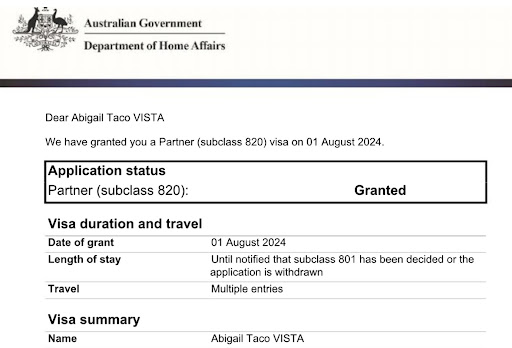
The Partner Visa (Subclass 820) is for applicants who are already in Australia when they lodge their application.
If you lodge a valid Partner Visa application while holding an eligible substantive visa, you will generally be granted a Bridging Visa A (BVA). The Bridging Visa A usually becomes active when your current substantive visa ends, allowing you to remain lawfully in Australia while your application is being processed.
If your temporary Partner Visa is granted and you continue to meet the eligibility requirements, you may later be considered for the permanent Partner Visa (Subclass 801).
Who Can Apply?
To be eligible for a Partner Visa, you generally must:
- Be legally married to or in a genuine de facto relationship with an Australian citizen, Australian permanent resident, or eligible New Zealand citizen.
- Be sponsored by your eligible partner, who meets the sponsorship requirements.
- Meet Australia’s health and character requirements, where requested by the Department of Home Affairs.
- Demonstrate that your relationship is genuine and continuing.
Every application is assessed individually by the Department of Home Affairs based on the information and supporting evidence provided.
Proving Your Relationship
One of the most important parts of a Partner Visa application is demonstrating that your relationship is genuine and ongoing.
The Department of Home Affairs generally considers evidence across four key areas.
1. Financial Aspects
This may include:
- Joint bank account statements
- Shared household expenses
- Joint ownership of assets
- Evidence of financial support between partners
A joint bank account can strengthen your application, but it is not a mandatory requirement. The Department considers your overall financial arrangements rather than relying on a single document.
2. Nature of the Household
Evidence may include:
- Lease or tenancy agreements
- Utility bills showing the same residential address
- Mail addressed to both partners
- Evidence of shared household responsibilities
These documents help demonstrate that you share a home and daily life together.
3. Social Aspects of the Relationship
The Department also considers whether your relationship is recognised by family, friends, and the wider community.
Useful evidence may include:
- Photographs together over time
- Travel itineraries
- Invitations addressed to both partners
- Statements from family members or friends
- Evidence of attending events together
4. Commitment to Each Other
This section focuses on your long-term commitment as a couple.
Supporting documents may include:
- Personal statements from both partners
- Communication records during periods apart
- Future plans together
- Evidence demonstrating an ongoing relationship
Providing a variety of evidence across all four areas generally presents a stronger application than relying on only one type of document.
Common Mistakes to Avoid
Many Partner Visa applications experience delays because of avoidable mistakes.
Some of the most common include:
- Providing limited relationship evidence.
- Submitting inconsistent information across documents.
- Forgetting to update the Department of Home Affairs if personal circumstances change.
- Responding late to requests for additional information.
- Relying on only one category of evidence instead of demonstrating all aspects of the relationship.
Preparing a well-organised application from the beginning can help minimise delays and allow the Department to assess your application more efficiently.
What Happens After You Apply?
Once your application has been lodged, the Department of Home Affairs may request additional documents, police clearances, health examinations, or further information before making a decision.
If you are applying onshore and hold a Bridging Visa A, remember that this visa does not allow you to re-enter Australia if you travel overseas. If you need to leave Australia while your Partner Visa application is being processed, you should generally apply for a Bridging Visa B (BVB) before you travel.
Processing times vary depending on individual circumstances, the completeness of the application, and the Department’s workload. Because every application is different, no processing timeframe or visa outcome can be guaranteed.
How EMC Australia Can Help
Preparing a Partner Visa application involves more than completing forms. Organising relationship evidence, understanding the legal requirements, and responding to requests from the Department of Home Affairs all require careful preparation.
At EMC Australia, we assist clients in preparing their Partner Visa applications and organising the required supporting documents. Where migration advice or visa assistance is required, our Registered Migration Agent (RMA) provides professional advice in accordance with Australian migration law.
Our goal is to help you understand the process, prepare a well-supported application, and guide you through each stage with confidence.
Ready to Start Your Partner Visa Journey?
Whether you’re applying from overseas through the Subclass 309 pathway or from within Australia through the Subclass 820 pathway, understanding the process is the first step towards building your future together.
If you would like professional guidance tailored to your circumstances, book a consultation with our Registered Migration Agent.
WhatsApp: +61 047 827 8410
Email: k.rivera@emcaustralia.com.au
Website: https://www.emcaustralia.com.au
Facebook: https://www.facebook.com/emc.aust