
Australia’s immigration story is a tapestry of human movement, shaped by geography, politics, and global events. Spanning from the arrival of Indigenous people’s tens of thousands of years ago to today’s skilled migrant influx, this history reflects a nation built on waves of newcomers. Understanding Australian immigration history helps explain the country’s vibrant multiculturalism and ongoing debates about borders and population growth. In this article, we’ll explore key milestones, trends, and data, highlighting how policies have evolved over time.
The First Arrivals: Indigenous Peoples and Early European Contact
The story of immigration to Australia begins long before European ships appeared on the horizon. Archaeological evidence shows that Aboriginal and Torres Strait Islander peoples arrived on the continent around 65,000 to 80,000 years ago, migrating from Southeast Asia via land bridges and sea crossings during the Ice Age. These first inhabitants developed rich cultures, languages, and connections to the land, forming over 250 distinct nations. [Wikipedia]
European contact started in the 17th century with Dutch explorers, but large-scale immigration began in 1788 with the British First Fleet. This marked the start of convict transportation, where over 160,000 convicts were sent from Britain between 1788 and 1868 to establish penal colonies. Free settlers followed, drawn by land opportunities. The 1850s gold rushes triggered a boom, attracting over 600,000 people, including many Chinese miners, leading to anti-Asian sentiments and early restrictions.
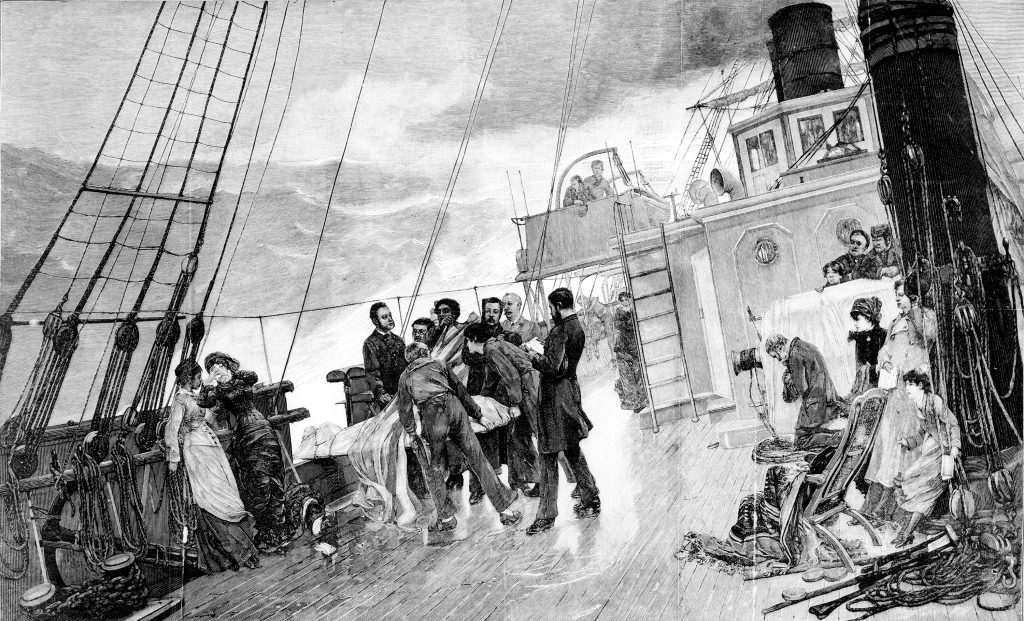
Journeys to Australia
This era laid the foundation for Australia’s population growth, but it was marred by displacement of Indigenous communities and discriminatory laws.
Federation and the White Australia Policy
In 1901, Australia federated as a nation, and one of its first acts was the Immigration Restriction Act, part of the infamous White Australia Policy. This policy aimed to limit non-European immigration through tools like the dictation test, where applicants had to write 50 words in any European language chosen by officials—often rigged to exclude unwanted groups. From 1901 to the 1940s, immigration focused on British and European settlers, with assisted passages for “ten-pound Poms” (British migrants paying £10 for the journey).[Museum Victoria] [Home Affairs]
By the 1930s, the Great Depression slowed inflows, but the policy entrenched a preference for white Europeans. Exceptions included Pacific Islanders for labor, though many were deported under the policy. This period saw net migration fluctuate, with averages around 50,000 annually in the interwar years.
Post-World War II: The Mass Migration Boom
World War II transformed Australia’s immigration landscape. Facing threats from Asia and a small population of just 7 million, the government adopted the slogan “populate or perish.” In 1945, the Department of Immigration was established, launching ambitious programs to attract migrants. [Migration Heritage Centre]
Between 1945 and 1965, over 2 million people arrived, many assisted by the government. Initially, priority went to British, but shortages led to agreements with the International Refugee Organization, bringing displaced persons from Europe—over 170,000 by 1952, including Poles, Germans, and Italians. Schemes like the Snowy Mountains Hydro-Electric project employed thousands of migrants.
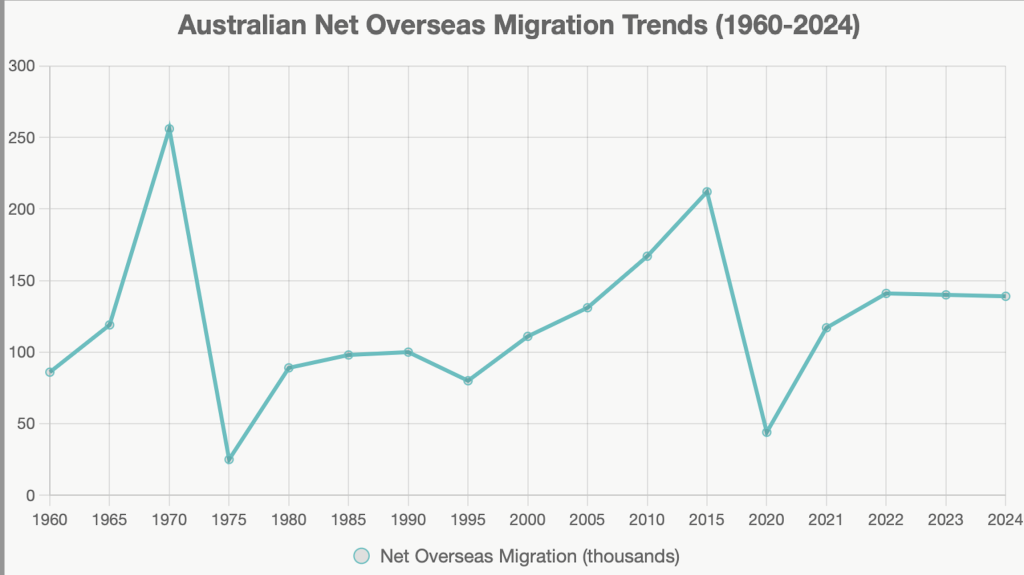
Net overseas migration (NOM) surged, peaking at over 250,000 in 1970. This era diversified Australia, though the White Australia Policy lingered until gradual reforms in the 1950s and 1960s.
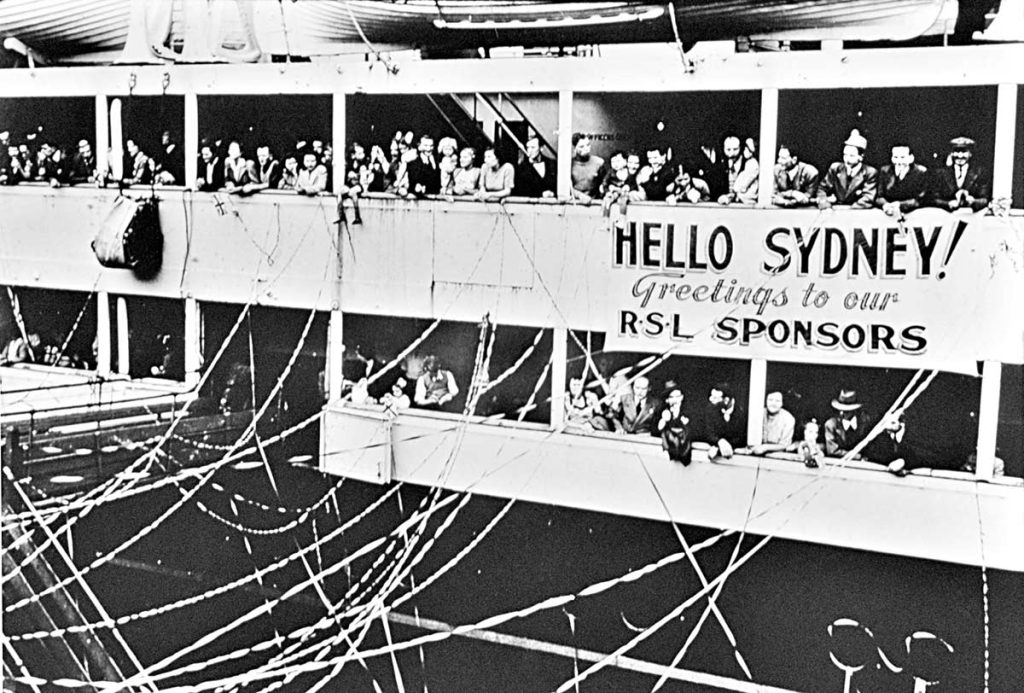
Migration experiences Defining Moments, 1945–present | 3 …
Dismantling Barriers: The Rise of Multiculturalism
The 1970s marked a pivotal shift. In 1973, the Whitlam government officially ended the White Australia Policy, replacing it with non-discriminatory criteria based on skills and family ties. The 1975 Racial Discrimination Act reinforced this. Multiculturalism became official policy under Fraser in 1978, celebrating diversity. [Home Affairs] [PRB]
The Vietnam War brought the first “boat people”—over 2,000 Vietnamese refugees by 1978, expanding to 137,000 by the 1990s through orderly programs. Immigration sources shifted to Asia, with China and India becoming top origins.
NOM dipped in the 1970s to around 25,000 in 1975 but rebounded to 140,000 by 1987. The 1980s and 1990s emphasized skilled migration, with points-based systems favouring professionals.
Modern Policies: Skilled Focus and Border Control
From the 2000s, immigration policy balanced economic needs with security. The Howard government’s Pacific Solution (2001) detained asylum seekers offshore, evolving into Operation Sovereign Borders in 2013, which turned back boats. Temporary visas boomed—students, workers on 457 visas (now 482), and backpackers. [sbs.com.au]
The global financial crisis briefly slowed inflows, but NOM hit 275,000 in 2008. By 2019, India, China, and the UK were top sources, with over 7 million foreign-born residents (29% of population.[macrotrends.net]
COVID-19 disrupted everything. Borders closed in 2020, leading to negative NOM of -89,000 in 2020-21—the first loss since World War I. Reopening in 2022 sparked a surge: 518,000 in 2022-23, driven by students and workers.[abs.gov.au]
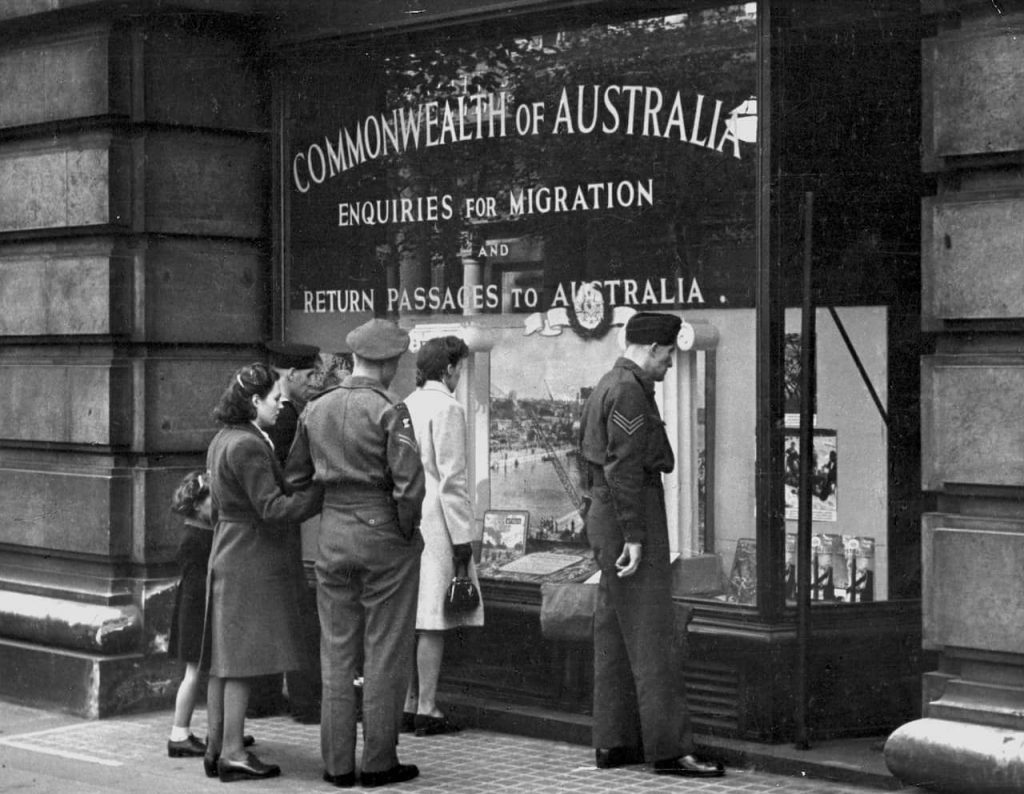
A brief history of immigration to Australia | SBS News
Current Trends and Future Outlook
As of 2025, NOM stands at 306,000 for 2024-25, down from 429,000 the prior year, amid caps on international students and housing pressures. Trends show a shift to temporary migration: over 2.8 million temporary visa holders in 2023, boosting the economy but straining infrastructure. Top sources include India (net gain leading), China, and the Philippines.
Graphs reveal peaks post-WWII, in the 2000s boom, and post-COVID recovery, with dips during economic downturns and pandemics. For instance, NOM trends from 1960 onward show volatility, with recent years stabilizing around 140,000 annually per some estimates, though ABS figures highlight higher post-pandemic levels. [abs.gov.au]
Looking ahead, Australia’s immigration will likely prioritize skills in tech, health, and green energy, while addressing climate-driven displacement and aging populations. With 30% foreign-born, the nation remains a global migration success story, but challenges like integration and equity persist. The Gurdian
In summary, Australian immigration history evolved from exclusionary roots to inclusive policies, driving economic and cultural growth. As trends shift, the landscape continues to adapt to global realities.
You wish to read another article follow the following link- Australia’s 2026 Migration Framework